Training
Strategy
The closer you get to the hole, the smaller the target becomes. With a driver, the fairway is the target. On the approach shot, the green is the target. On the first putt (a distance putt), the target is a 1-meter zone around the hole. On the final short putt, the target is the hole itself — just 10.8 cm in diameter.
That means: the closer you get to the hole, the more important that shot is for your score. The short game (putting, chipping, pitching) is responsible for approximately 75 % of the score. However, most amateurs train exactly the opposite — often using the driving range and focusing only on the driver (the long game).

Train with B.A.M. (Backwards Approach Method)

1. Putting
a) short putts
b) then longer putts
2. Chipping
3. Pitching
4. Long game
This way your training becomes focus- and goal-oriented, aimed at achieving a low score.
Be target-focused instead of swing-focused!
What Makes Good Training — These 3 Things
Emotions Shape Our (Golfer’s) Life
The more automatized and routine a function becomes (for example through drills), the easier it becomes for our brain. Emotions help us store experiences more deeply in memory. That means with the S-T-E-P method you can learn and internalize better.
How strongly stress (e.g. fear before the first tee shot) affects you depends heavily on whether you experience the situation as controllable or uncontrollable.
Even small successes in training — like mastering a chip or a putt — evoke positive emotions. That’s another reason to start training with putts and chips: you get quick wins, boost motivation, and build confidence.
Emotional Self-Management
Negative emotions (e.g. fear) often come with limiting beliefs (e.g. “I can’t make that first shot”). As a golfer, you can overcome them by transforming the negative images associated with those emotions into positive, motivating ones.
Reference: Heidrun Vössing, Emotions-Coachiing, ISBN 978-3-84237-403-4

BASIC MODULE: S-T-E-P
S-T-E-P helps you understand golf technique and the game fundamentally.
Understanding the game and technique builds security.
Security creates calmness.
A calm, relaxed swing is a successful swing.
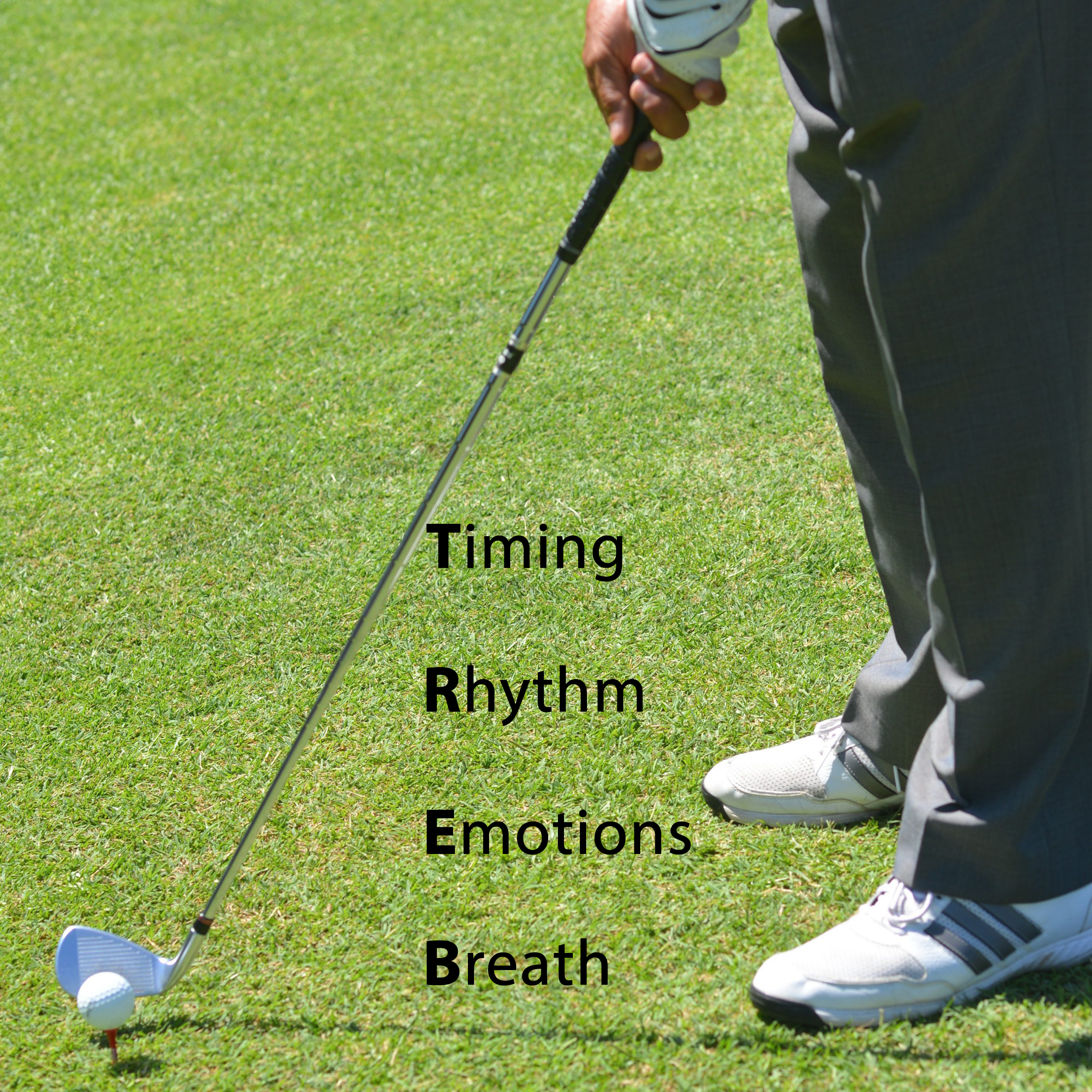
ADVANCED MODULE: T-R-E-B